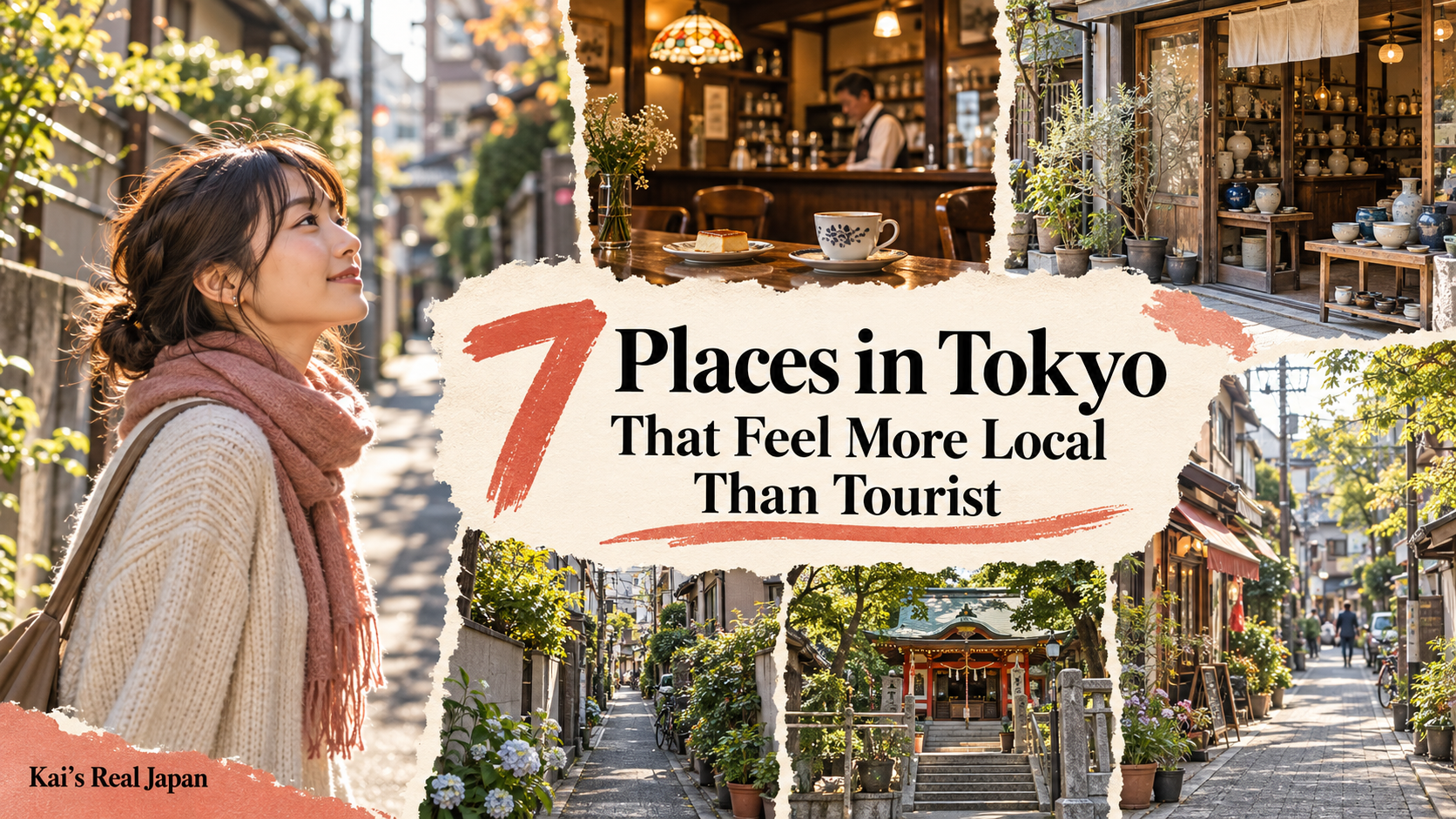
When people think of Tokyo, places like Shibuya, Shinjuku and Asakusa usually come to mind.
And yes — they’re absolutely worth visiting.
But Tokyo is much more than its famous landmarks.
Step away from the busiest tourist routes and you’ll find quiet temple streets, old shopping districts, tiny cafés, neighborhood restaurants, retro houses and places where everyday life moves at a completely different pace.
These are the parts of Tokyo I want to share with you.
Here are 7 places where you can slow down, wander around, and experience a more local side of Tokyo.
Welcome to REAL PLACES.
- 01. Yanaka — Tokyo’s Nostalgic Neighborhood
- 02. Kagurazaka — Where Old Tokyo Meets Europe
- 03. Shibamata — A Step Back into Old Tokyo
- 04. Kiyosumi-Shirakawa — Old Tokyo Meets Coffee & Art
- 05. Nishi-Ogikubo — Antiques, Cafés & Tokyo Backstreets
- 06. Jindaiji — Temple, Soba & a Slower Side of Tokyo
- 07. Kameari — Everyday Tokyo with a Manga Twist
- Tokyo Is More Than Its Famous Sights
01. Yanaka — Tokyo’s Nostalgic Neighborhood
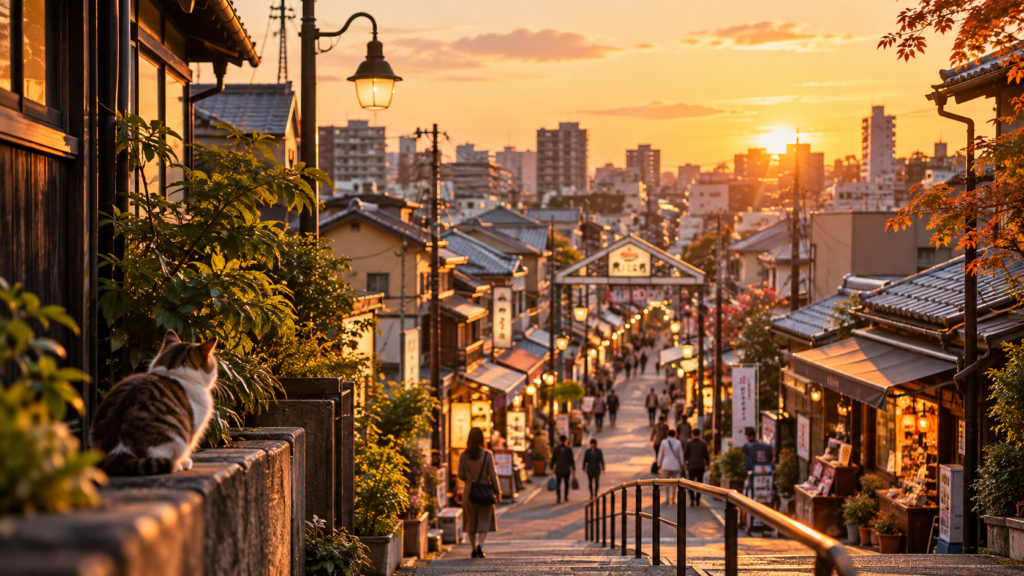
Just a short ride from central Tokyo, Yanaka feels like a different side of the city.
Instead of skyscrapers and giant screens, you’ll find narrow streets, small temples, traditional houses and family-run shops. Much of the area has kept the atmosphere of Tokyo’s older shitamachi neighborhoods.
📍 WHY GO
Come here when you want to slow down and simply walk. Yanaka is less about checking off famous landmarks and more about enjoying the atmosphere of the neighborhood itself.
👟 WHAT TO DO
Walk through Yanaka Ginza, explore the small streets around the temples, stop at a local café or snack shop, and keep an eye out for the neighborhood’s famous cat-themed details.
💡 KAI’S TIP
Visit in the late afternoon and walk toward the Yuyake Dandan steps. “Yuyake” means sunset in Japanese — and this area feels especially nostalgic as the light begins to soften.
02. Kagurazaka — Where Old Tokyo Meets Europe
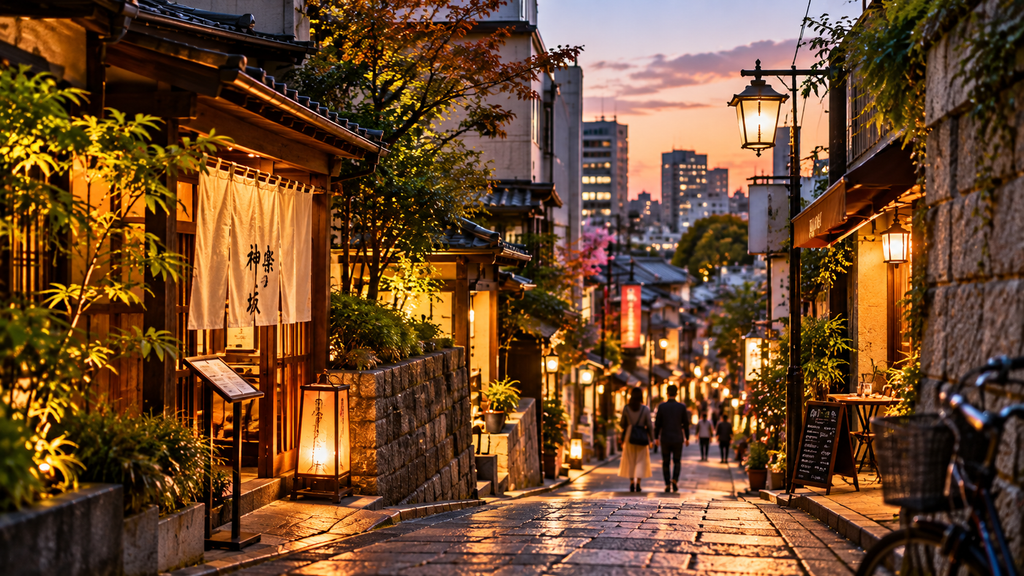
Kagurazaka is one of Tokyo’s most interesting neighborhoods to explore on foot.
Once known as a geisha district, the area still has narrow stone-paved alleys, traditional restaurants and small shrines. But walk a little farther and you’ll also find French cafés, bakeries and modern restaurants.
That unusual mix gives Kagurazaka a character you won’t find in many other parts of Tokyo.
📍 WHY GO
Kagurazaka is perfect if you enjoy wandering without a strict plan. Leave the main street and explore the smaller alleys — some of the most atmospheric corners are easy to walk right past.
👟 WHAT TO DO
Walk up Kagurazaka-dori, explore the backstreets around Hyogo Yokocho, visit Akagi Shrine, and stop at one of the neighborhood’s cafés or small restaurants.
💡 KAI’S TIP
Don’t stay only on the main street. Turn into the narrow side streets whenever something catches your eye. Kagurazaka is one of those places where getting a little lost is part of the experience.
03. Shibamata — A Step Back into Old Tokyo
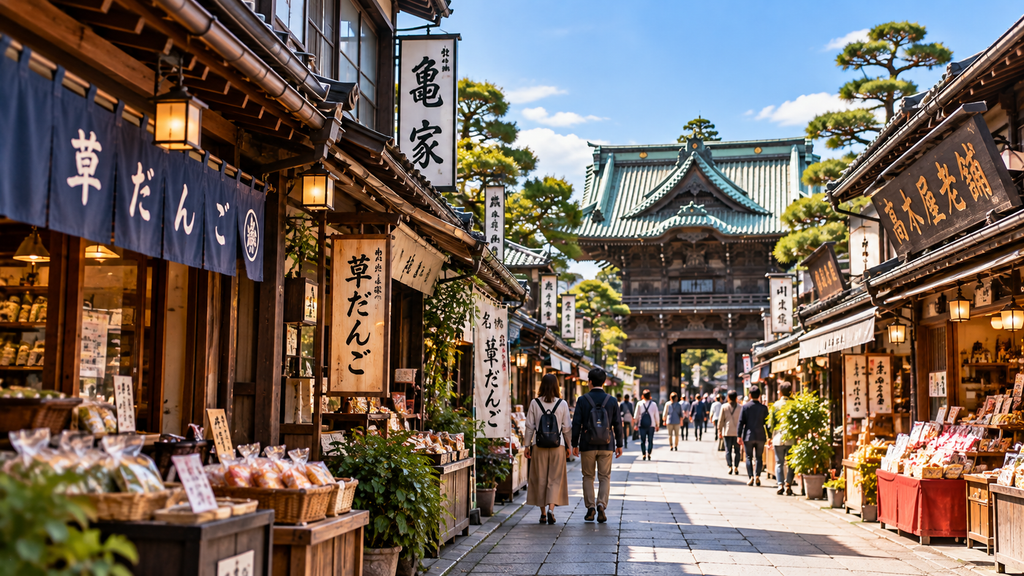
Shibamata feels almost like stepping into another era of Tokyo.
Located in the northeastern part of the city, this old shitamachi neighborhood is known for its traditional shopping street, historic temple and nostalgic atmosphere.
The approach to Taishakuten Temple is lined with small shops selling traditional sweets, rice crackers and local snacks — making the walk itself part of the experience.
📍 WHY GO
Come to Shibamata when you want to see a slower, more traditional side of Tokyo. It feels far removed from the crowds and giant buildings of central Tokyo.
👟 WHAT TO DO
Walk along the traditional shopping street leading to Shibamata Taishakuten, explore the temple grounds, visit Yamamoto-tei, and take a walk toward the Edogawa River.
💡 KAI’S TIP
Don’t rush straight to the temple. Take your time along the approach and look inside the little shops. Trying a snack while walking through the neighborhood is part of the Shibamata experience.
04. Kiyosumi-Shirakawa — Old Tokyo Meets Coffee & Art
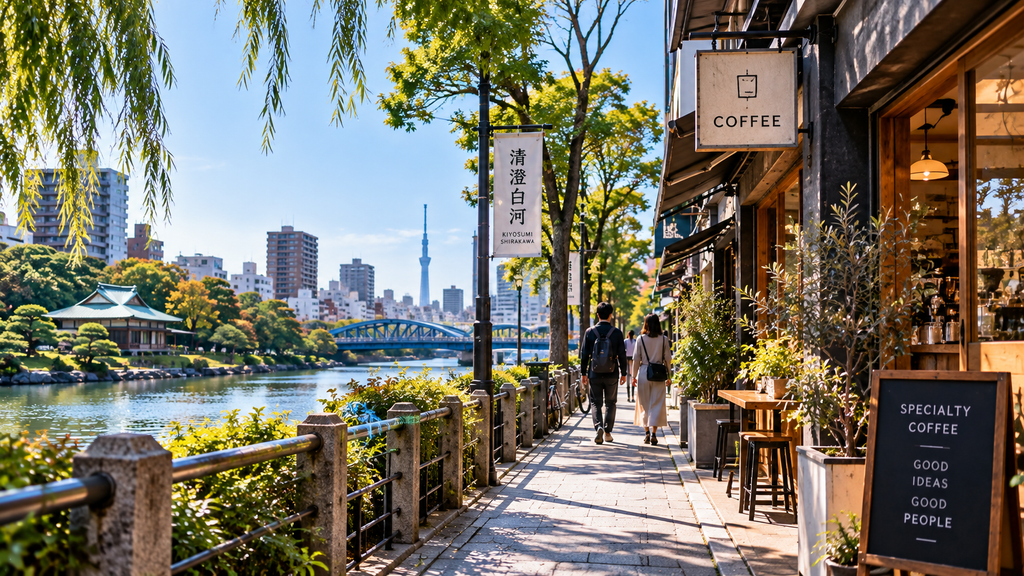
Kiyosumi-Shirakawa is a neighborhood where two very different sides of Tokyo come together.
The area has deep roots in old Fukagawa, with traditional streets, temples and the beautiful Kiyosumi Gardens. But today, it’s also known for specialty coffee, independent cafés, galleries and contemporary art.
Walk around for a while and you may find an old wooden building just a few steps away from a minimalist modern café.
That contrast is exactly what makes Kiyosumi-Shirakawa interesting.
📍 WHY GO
Come here if you want a quieter Tokyo neighborhood that mixes history with modern local culture.
It’s a great place to slow down, grab a coffee and explore without feeling like you’re moving from one major tourist attraction to another.
👟 WHAT TO DO
Start with a walk through Kiyosumi Gardens, then explore the surrounding streets and stop at one of the neighborhood’s many coffee shops.
If you enjoy art, you can also combine the area with museums and galleries around Kiyosumi-Shirakawa and nearby Kiba.
💡 KAI’S TIP
Don’t plan every café before you arrive.
Choose one you really want to visit, then walk around and see what else you discover.
Some of the best moments in neighborhoods like Kiyosumi-Shirakawa come from finding a small café, shop or street you weren’t looking for.
05. Nishi-Ogikubo — Antiques, Cafés & Tokyo Backstreets
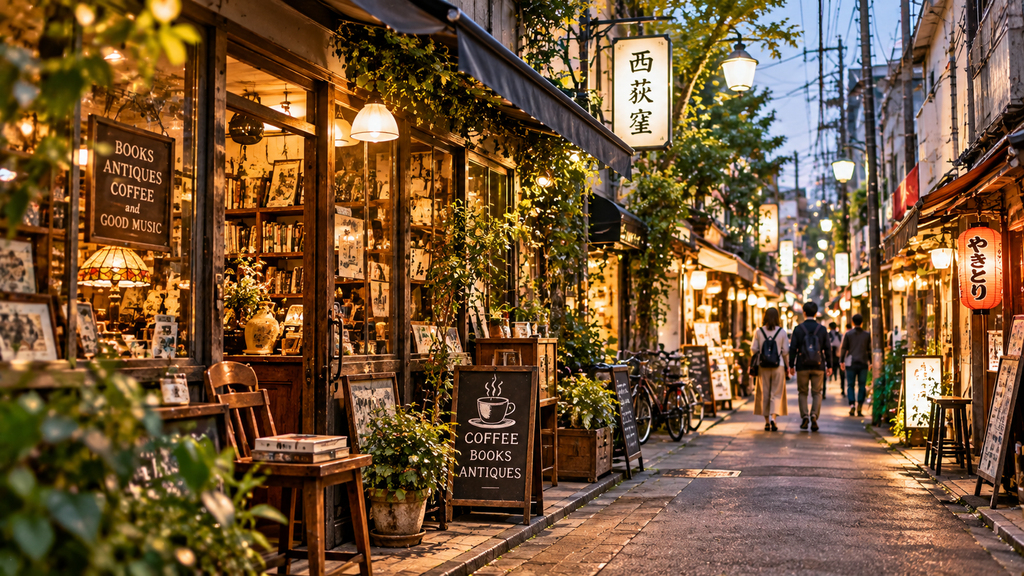
Nishi-Ogikubo feels more like a neighborhood to live in than a place designed for tourists — and that’s exactly why I like it.
Around the station and along the smaller streets, you’ll find antique shops, secondhand bookstores, independent cafés, old-fashioned kissaten and tiny local bars.
There isn’t one huge attraction that everyone comes here to photograph.
Instead, the neighborhood itself is the attraction.
📍 WHY GO
Come here if you want to experience an ordinary Tokyo neighborhood with plenty of personality.
It’s especially good for people who enjoy antiques, books, cafés and simply wandering through quiet backstreets.
👟 WHAT TO DO
Start around Nishi-Ogikubo Station and explore without following a strict route.
Look inside the small antique and vintage shops, stop for coffee at a local café, and wander into the narrow streets away from the main road.
The area becomes especially atmospheric toward evening, when the small restaurants and bars begin to light up.
💡 KAI’S TIP
Don’t come here with a checklist.
Nishi-Ogikubo is better when you give yourself time to get a little lost.
Turn down a street simply because it looks interesting.
That’s often where you find the Tokyo you’ll remember.
06. Jindaiji — Temple, Soba & a Slower Side of Tokyo
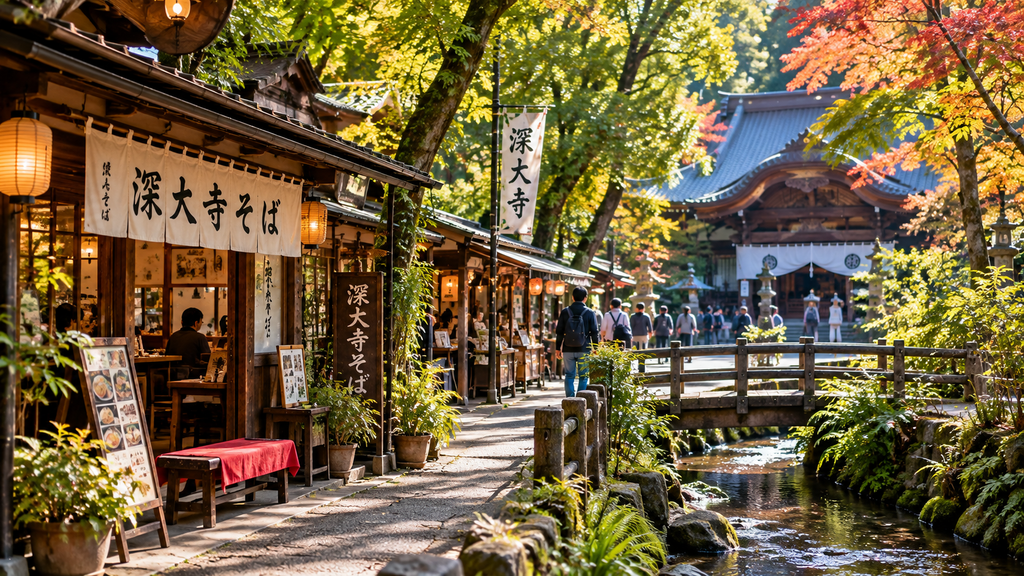
Tokyo isn’t all neon lights, crowded crossings and skyscrapers.
Jindaiji shows a completely different side of the city.
Surrounded by greenery in Chofu, this historic temple area feels calm and almost rural. Around the temple, you’ll find traditional soba restaurants, small shops, streams and tree-lined paths.
It’s the kind of place where Tokyo suddenly seems to slow down.
📍 WHY GO
Come here when you want a break from central Tokyo without actually leaving Tokyo.
The combination of an old temple, nature and traditional food makes Jindaiji feel very different from places like Shibuya, Shinjuku or Asakusa.
👟 WHAT TO DO
Walk through the temple grounds, explore the small streets around Jindaiji and stop for a bowl of Jindaiji soba.
Take your time.
This isn’t really a place where you need to rush from attraction to attraction.
Nearby Jindai Botanical Gardens can also make this an easy half-day escape from the city center.
💡 KAI’S TIP
Come hungry.
Soba is part of the experience here, not just somewhere to stop for lunch.
And after eating, don’t immediately head back to the station.
Walk around the quieter paths near the temple.
That slower part of the visit is probably what you’ll remember most.
07. Kameari — Everyday Tokyo with a Manga Twist
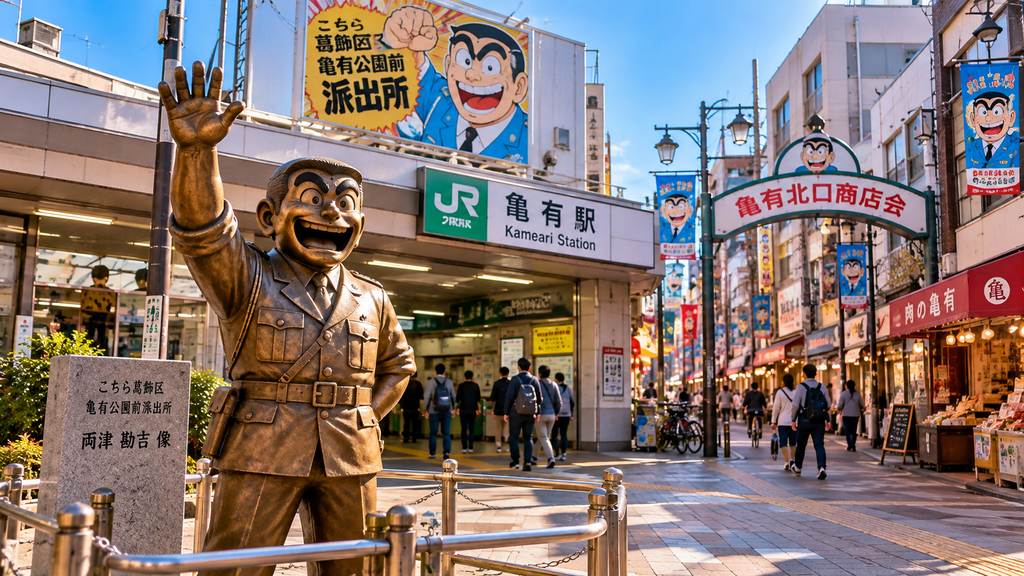
Kameari probably isn’t the first place that comes to mind when you think about sightseeing in Tokyo.
And that’s exactly why it belongs on this list.
This northeastern Tokyo neighborhood feels like a real residential town, with local shopping streets, small restaurants and people simply going about their everyday lives.
But Kameari also has another identity.
It’s famously connected to the long-running manga Kochikame, and you’ll find characters and references from the series around the neighborhood.
📍 WHY GO
Come here if you’re curious about what Tokyo feels like away from the major sightseeing districts.
Kameari gives you something places like Shibuya and Asakusa can’t: the feeling of visiting an ordinary Tokyo neighborhood that wasn’t built around tourism.
The Kochikame connection adds a fun piece of Japanese pop culture on top of that.
👟 WHAT TO DO
Start around Kameari Station and look for the Kochikame character statues scattered around the area.
Walk through the local shopping streets, stop somewhere for lunch and simply explore the neighborhood.
Fans of the manga can also visit the Kochikame Memorial Museum.
But even if you’ve never read Kochikame, Kameari is worth visiting for the atmosphere of everyday Tokyo.
💡 KAI’S TIP
Don’t worry if you know nothing about Kochikame.
Think of the manga as a bonus rather than the main reason to visit.
Walk around, look at the shops, watch daily life happening around you and eat somewhere that catches your eye.
Sometimes the most memorable part of Tokyo is the part that doesn’t feel like sightseeing at all.
Tokyo Is More Than Its Famous Sights
Tokyo has plenty of places everyone should see at least once.
Shibuya Crossing, Sensoji, Tokyo Skytree and Meiji Shrine are famous for a reason.
But they’re only one version of Tokyo.
Walk a little farther from the usual sightseeing routes and the city begins to feel different.
You’ll find old shopping streets, tiny cafés, quiet temples, neighborhood restaurants and ordinary streets where people are simply living their everyday lives.
Yanaka, Kagurazaka, Shibamata, Kiyosumi-Shirakawa, Nishi-Ogikubo, Jindaiji and Kameari are all different.
That’s exactly the point.
There isn’t just one “real Tokyo.”
Sometimes it’s an old temple street.
Sometimes it’s coffee in a renovated building.
Sometimes it’s a quiet residential neighborhood where nothing particularly famous is happening.
And sometimes, that’s the Tokyo you remember most.
If this is your second trip to Tokyo — or you simply want to see something beyond the usual tourist checklist — choose one of these neighborhoods and spend a few hours walking without rushing.
You might discover your own favorite corner of Tokyo.
Want to discover more of the Japan people actually live in?
Explore more REAL PLACES on Kai’s Real Japan.